Showing posts with label Cancer. Show all posts
Thursday, 28 October 2010
Hva skal jeg i dag? (Norwegian only...)
Foredrag om rekonstruksjon av bryst i Gjøvik, 28. oktober 2010
Tid: Kl. 18.30
Sted: Stråleenheten ved Sykehuset Innlandet, Kyrre Greppsgt. 11, Gjøvik

Arrangør: Kreftforeningen
Hva skjer:
Foredrag om rekonstruksjon av bryst ved Haris Mesic, plastsik kirurg på Ullevål Sykehus.

Etiketter:
Cancer
Saturday, 9 October 2010
Touching your heart?
I have ordered 1 Still panel fabric of course. October month is BREAST CANCER AWARDNESS MONTH and since I'm a pink lady I had to have this fabric. Take care and enjoy your weekend :-)
Tuesday, 30 March 2010
New free patterns from FatCat Patterns
"Chicken me"
Sindy met a challenge to create a chicken block that would represent themselves. Of course she had to share hers with us! Her chicken fell asleep at her computer while playing around with Electric Quilt.
Funny result I think! Thank you for sharing, Sindy :-)
"Pink Warrior"
Sindy also made this pattern for Breast Cancer Awareness. This years theme "Pink Warrior" prickled her imagination perfectly!!!
Thank you Sindy from a PINK LADY :-)
Go here to download her patterns.
Thursday, 24 December 2009
Merry Christmas to all of my friends
Today is Christmas Eve and in Norway we celebrate this evening. All of our girls are home for Christmas and we are going to enjoy a good dinner, eachothers company and every minute of our holiday. I always enjoy the sight of Christmastree and the snow outside our house. I have a special reason to celebrate tonight; It's been two years since I finished my cancer treatment. My last radiation treatment took place on Christmas morning 2007...... So I sending a special wish to all "pink" ladies out there; All the best wishes for you and your families. And to all of my readers; Happy Christmas to you all!
Friday, 4 December 2009
In memory of Regine Stokke
For some time I have followed Regine Stokkes blog "Face your fear" and yesterday died this wonderful 18 years old girl from cancer (MDS-AML). She has touched everyone who read her blogging about her days and months with this disease. I didn't know her, but I felt I did. Regine had a very frank manner and she was willing to be open and honest about her situation. Sail on Silver Girl.....You will always SHINE in our hearts.
I'll take your part
when darkness comes
And pain is all around
Like a bridge over troubled water
I will lay me down
Like a bridge over troubled water
I will lay me down
Sail on Silver Girl,
Sail on by
Your time has come to shine
All your dreams are on their way
See how they shine
If you need a friend
I'm sailing right behind
Like a bridge over troubled water
I will ease your mind
Like a bridge over troubled water
I will ease your mind
Wednesday, 11 November 2009
I got this artice from a very dear co-worker and I thought you might be interested also
Breast Cancer May Be Gone, But Pain Lingers
Nearly half of patients have chronic pain, researchers find
Posted November 10, 2009
By Kathleen Doheny
HealthDay Reporter
TUESDAY, Nov. 10 (HealthDay News) -- Even three years after finishing treatment for breast cancer, almost 50 percent of women report long-term pain, a new Danish study finds.
The research, published in the Nov. 11 issue of the Journal of the American Medical Association, strengthens earlier findings, said study senior author Dr. Henrik Kehlet, a professor of perioperative therapy at Rigshospitalet at Copenhagen University. But this work indicates which women are most likely to experience persistent pain.
"Several previous scientific reports have shown a risk of chronic pain after breast cancer surgery," said Kehlet. The strength of this study, he noted, is the large number of participants -- more than 3,000 -- and the evaluation of many types of treatments.
Kehlet's team reviewed questionnaires filled out by 3,253 women who had undergone breast cancer treatment in Denmark between 2005 and 2006. Their treatments varied and included breast-conserving surgery, mastectomy, radiation, chemotherapy and dissection of the lymph nodes.
The women were asked whether they experienced pain, in what areas of the body, how bad it was and how often they experienced it.
In all, 1,543 -- 47 percent -- reported pain in one or more areas. Of those, 52 percent reported severe or moderate pain.
Among those who had severe pain, 77 percent said they had it daily. For those who reported their pain as light, 36 percent had it every day. Pain was reported in the breast area, the armpit, the arm and the side of the body.
The research was funded by the Danish Cancer Society, Breast Friends and a private organization that funds science research, the Lundbeck Foundation.
Women under 40 were more than three times more likely to have chronic pain than older women, the researchers found. Those having radiation therapy were more likely to have pain than those who had chemotherapy. Dissection of the axillary (under arm) lymph node was associated with increased likelihood of pain compared to dissection of the sentinel lymph node (the first node to which the cancer is likely to spread).
Why does the pain linger?
"There are multiple mechanisms to explain the risk of chronic pain," Kehlet said, "such as young age, risk of nerve damage during axillary dissection, radiation therapy or a general pain hyper-responsiveness in some patients."
More research is needed on the pain mechanism in those who experience high levels of discomfort, he said. The focus for now should be on identifying patients at high risk for pain and providing preventive treatment and nerve-sparing treatment when possible.
The results do not surprise Dr. Robert H. Dworkin, a pain specialist and professor of anesthesiology, neurology, oncology and psychiatry at the University of Rochester School of Medicine and Dentistry in New York, who has also published on lingering cancer pain.
But the findings may come as a surprise to oncologists and others who treat cancer patients, he said. "Women tend not to tell their surgeons about this continuing pain," he said, citing clinical experience. Why? "They fear that the fact they are in pain might mean a recurrence, and they don't want to deal with it," he said. Or, "they don't want to hurt the oncologist's feelings."
A third reason is "they don't want to distract the physician from thinking about the cancer," he said.
Even pain specialists can't say for sure why the pain lingers. "We have little understanding of what causes this kind of pain," Dworkin said.
A woman in pain after breast cancer treatment "should not be shy in talking to her physician about it," Dworkin said. He advises such women to ask for a referral to a pain specialist.
Etiketter:
Cancer
Saturday, 31 October 2009
Give Away.... Give Away from Just Another Hang Up
Go to Just Another Hang Up and see the rules.
"Come join us for a celebration of life and love. In the title of this post it lists this contest as a "Give-Away ... Give-Away." That's because this contest is going to be a little different. You will still be submitting your name for a drawing via a comment below, but the lucky winner will have this tote sent to a person of his/her choosing. That's why I say it's a "Give-Away" (from me to you) "Give-Away" "
Friday, 9 October 2009
I've got this email from a very good friend today
Hello, Pretty Lady!
You have been hit.
You have been considered one of the prettiest ladies with a kind, warm and loving heart. Once you have been hit, you have to hit 10 pretty ladies with kind, warm and loving hearts. If you get hit again you know you're really pretty and kind.
SEND THIS TO PRETTY LADIES, TO BRIGHTEN THEIR DAY, INCLUDING THE ONE WHO SENT IT TO YOU! REMIND LADIES TO BE INFORMED, AWARE AND BE CHECKED FOR THEIR HEALTH'S SAKE. TELL THEM THAT NO ONE WANTS TO LOSE THEM - AFTER ALL, THEY ARE PRETTY LADIES WITH KIND, WARM LOVING HEARTS..
All you are asked to do is keep this circulating (even if to one person).
In honor or memory of anyone you know that has been struck by cancer.
Monday, 5 October 2009
Pink Ribbons days
Breast cancer is the leading cause of cancer in women worldwide.
In Norway 2761 new instances of breast cancer were diagnosed in 2007. I was one of the 2761!
In all 33889 women living in Norway have once been diagnosed with breast cancer. The breast cancer survival rate has increased, due to improvements in early diagnostic procedures followed by more tailored and/or more aggressive therapies. More patients are longterm survivors and live with the longterm side effects of the disease and treatment. Different rehabilitation programmes have been developed to treat the side effects occurring after the treatment of breast cancer. Although rehabilitation of breast cancer patients has been a priority during the last years, there still a need for evidence on which types of interventions are the most effectual.
Physical activity after primary cancer treatment may increase quality of life and reduce fatigue. Physical exercise and physiotherapy have been very important to me in order to manage to do my job and make life bearable; so thank you Gunnhild (my physiotherapist)! But only one physio-hour every third week is NOT TO MUCH!!!!
So when you see somebody with Pink Ribbon-action in your neightbourhood; think of us Pink ladies! Pink Ribbon is an international movement to promote breast cancer awareness and to raise funds for breast cancer research. The goal of the Norwegian Pink Ribbon movement is to express solidarity with those affeced by breast cancer, spread information and increase knowledge of breast cancer related issues as well as to raise funds for breast cancer research.
October has become the international breast cancer awareness month. Think PINK!
Friday, 18 September 2009
Pink Ribbon Pin-Pattern from Connecting Threads
Show your support for all us breast cancer survivors by making your own pink ribbon pin and wearing it with pride this October. The online pattern is free and available in two sizes, so you can help raise awareness by sewing this simple quilted ribbon for your family, co-workers, and friends.
And don't forget to examine your breasts :-)
Take care
Tuesday, 1 September 2009
I was badly caught there; fooled by an e-mail....
Some of the most pervasive e-mail hoaxes are ones about sick and/or dying children. We all want to help children, especially when cancer is involved. When help seems as easy as forwarding an e-mail, our conscience often trumps common sense.I got it in Swedish, but I found the same e-mail in English as well.
The e-mail hoax;
"This is not a joke or chain letter as such but a beautiful poem, and a lesson for us to consider.
This poem was written by a terminally ill young girl in a New York Hospital. It was sent by a medical doctor - Dr. Yeou Cheng Ma. Please do what you can to help fulfill this young girl's dream by also reading what is in the closing statement AFTER THE POEM.
Have you ever watched kids
on a merry-go-round
Or listened to the rain
slapping on the ground?
Ever followed a butterfly's erratic flight
Or gazed at the sun into the fading night?
You better slow down
Don't dance so fast
Time is short
The music won't last
Do you run through each day on the fly
When you ask "How are you?"
do you hear the reply?
When the day is done,
do you lie in your bed
With the next hundred chores
running through your head?
You'd better slow down
Don't dance so fast
Time is short
The music won't last
Ever told your child,
We'll do it tomorrow
And in your haste, not see his sorrow?
Ever lost touch,
Let a good friendship die
'Cause you never had time
to call and say "Hi"?
You'd better slow down
Don't dance so fast
Time is short
The music won't last
When you run so fast to get somewhere
You miss half the fun of getting there.
When you worry and hurry through yourday,
It is like an unopened gift....
Thrown away...
Life is not a race.
Do take it slower
Hear the music
Before the song is over.
PLEASE FORWARD THIS TO HELP THIS LITTLE GIRL. ALL FORWARDED E-MAILS ARE TRACKED TO OBTAIN THE TOTAL COUNT.
Dear All:
PLEASE pass this mail on to everybody you know. It is the request of a special little girl who will soon leave this world as she has cancer.
Thank you for your effort, this isn't a chain letter, but a choice for all of us to save a little girl that's dying of a serious and fatal form of cancer.
Please send this to everyone you know... or don't know. This little girl has 6 months left to live, and as her dying wish, she wanted to send a letter telling everyone to live their life to the fullest, since she never will.
She'll never make it to prom, graduate from high school, or get married and have a family of her own. By you sending this to as many people as possible, you can give her and her family a little hope, because with every name that this is sent to, The American Cancer Society will donate 3 cents per name to her treatment and recovery plan. One guy sent this to 500 people!!!!
So I know that we can send it to at least 5 or 6. Just think it could be you one day. It's not even your money, just your time!!! "PLEASE PASS ON AS A LAST REQUEST"
Dr. Dennis Shields, Professor Department of Developmental and Molecular Biology Albert Einstein College of Medicine "
Dear All:
PLEASE pass this mail on to everybody you know. It is the request of a special little girl who will soon leave this world as she has cancer.
Thank you for your effort, this isn't a chain letter, but a choice for all of us to save a little girl that's dying of a serious and fatal form of cancer.
Please send this to everyone you know... or don't know. This little girl has 6 months left to live, and as her dying wish, she wanted to send a letter telling everyone to live their life to the fullest, since she never will.
She'll never make it to prom, graduate from high school, or get married and have a family of her own. By you sending this to as many people as possible, you can give her and her family a little hope, because with every name that this is sent to, The American Cancer Society will donate 3 cents per name to her treatment and recovery plan. One guy sent this to 500 people!!!!
So I know that we can send it to at least 5 or 6. Just think it could be you one day. It's not even your money, just your time!!! "PLEASE PASS ON AS A LAST REQUEST"
Dr. Dennis Shields, Professor Department of Developmental and Molecular Biology Albert Einstein College of Medicine "
The e-mail in Swedish ;
Detta är en dikt som har skrivits av en tonåring med cancer. Hon vill se hur många det är som förstår hennes dikt. Skicka dikten vidare. Flickan bor på ett sjukhus som heter New York Hospital. Dikten är skickad av en läkare på sjukhuset. Kom ihåg att läsa det som står EFTER dikten också.
Här är dikten:
Långsam dans
Har du aldrig sett ett barn på en karusell?
Eller lyssnat på regnets plask i marken?
Någonsin följt en fjäril till en ojämn flygning?
Eller tittat på solens inre natt?
Det är bäst att sakta ner
Inte dansa så fort
Tiden är knapp
Musiken kommer inte sist
Brukar du gå genom varje dag i flyg?
När du frågar hur du mår?
Hör du svaret?
När dagen är klar vill du ligga i din säng
Med nästa hundra sysslor som springer i ditt huvud?
Det är bäst att sakta ner,
Inte dansa så fort
Tiden är knapp.
Musiken är inte sist.
Aldrig sagt till ditt barn, så ska vi göra det imorgon?
Och i all hast, Och inte se sorgen
Någonsin förlorat kontakten, låtit en god vänskap dö.
Leda till att du aldrig haft tid att ringa och säga 'Hej'.
Det är bäst att sakta ner.
Inte dansa så fort.
Tiden är knapp.
Musiken kommer inte sist.
När du kör så snabbt för att komma någonstans.
Du missar halva nöjet av att komma dit.
När du oroar dig och skyndar dig genom din dag,
Det är som en oöppnad gåva .... kastas bort.
Livet är inte en ras.
Får ta det långsammare.
Lyssna på musik.
Innan låten är över
Översatt av: Vanessa Palermo
Skickade e-mail är spårade för att räknas.
Till Alla: SNÄLLA skicka det här mailet till alla du känner - även de som du inte känner. Det är önskan av en speciell tjej som snart lämnar denna världen och låter cancern tar över. Denna unga flickan har 6 månader kvar att leva, och som hennes sista önskan, så ville hon skicka ett brev som berättade att alla skulle leva sitt liv fullt ut, eftersom att hon aldrig kommer att göra det. Hon kommer aldrig att gå på sin bal, ta studenten, gifta sig eller skaffa en egen familj.
När du sänder detta till så många människor du känner så kan du ge henne och hennes familj lite hopp, eftersom till varje namn som detta är skickat till så donerar Den Amerikanska Cancer Föreningen 3 cent per namn till hennes behandling och tillfrisknandes plan. En kille skickade detta till 500 personer! Så jag vet att vi kan skicka detta till minst 5 eller 6 st. Det är inte ens dina pengar, bara din tid! Så skicka detta till alla dina kontakter och ge alla cancersjuka en bättre framtid
Summary of eRumor An email says there is a little girl who has six months to live. People are asked to forward the email about her to as many people as possible because the American Cancer Society will give 3 cents per email to support her treatment. It stars with a poem titled SLOW DANCE. The email is signed with the name of a professor at Yeshiva University in New York
The Truth: According to the American Cancer Society, the email is a hoax. The girl in the story is never identified, the American Cancer Society has not made any such commitment, there is no way for forwarded emails to be accounted for even if someone wanted to make a donation for each one, and the professor named at Yeshiva University, Dr. Dennis Shields, says he never had anything to do with any such story. If you dial his number, you get a recording saying the story is not true. There are several versions of this email making the rounds of the Net. Some simply say this is a poem written by a dying girl. Others say the little girl gave it to a medical student. Others say the poem is being circulated by a doctor.The poem is actually from the pen of psychologist and writer David L. Weatherford (www.davidlweatherford.com).
BUT THE POEM IS BEAUTIFUL ANYWAY.

Etiketter:
Blogchat,
Cancer,
Songs and poems
Tuesday, 2 June 2009
My half-year cancer control
AND EVERYTHING IS OK!!!
As I said before; I want to live my life to the fullest! We can wallow in self pity and misery or we can CHOOSE to make the most of the hand we are dealt.
Is life a bitch or is life a beach?
Is the glass half empty or half full?
You can choose to think positive or you can mope, it's up to YOU!!!!
I usually just calmly tell myself that worrying about it isn't gonna change the outcome. Until someone tells me differently, I do not HAVE cancer, I HAD it. But every time you have to go to the hospital for medical examination or counsel you think a little bit further ....
Tomorrow we are some ladies from work who are going to join a seminar in Oslo called "Kvinner i tiden". I'm looking forward to hear Kathrine Møller talking about how happiness and quality of life are measured in our society. She got breastcancer at the age of 27....
Monday, 27 April 2009
Thursday, 23 April 2009
Link to Quiltthreads blog.
Go to Merediths blog to see her last breast cancer quilt. The quilt is raw edge applique and it is beautiful. And of course; she has used a lot of pink fabrics :-)
Sunday, 19 April 2009
My father's birtday
On the picture; my father, my brother Trygve, me and my oldest sister Anne.
Today is my father's birtday. He should be 75 years old if he still lived, but it is over three years since he passed away. He got cancer and died only one month after his cancer diagnosis. When death becomes a real possibility, hard decisions must be made. People with cancer and family members often face a range of strong and difficult emotions, such as anxiety, uncertainty, and sadness.
Often people don’t want to talk about death, but studies have shown that clear communication can help people feel better about their decisions and more in control.
My father was a very kind and gentle man.
Every child loved him and he loved being with them. When he retired on his pension he planned to do many things together with my mum but in stead he got dementia and later cancer. He didn't get any treatment for his cancer. Only pain relieving treatment and caring hands and hearts from my mother and sister.
I miss him very much!!
Thursday, 12 March 2009
The Artfull Bras Project. BRAS FOR A CAUSE
A nice co-worker emailed me this message:
"OH MY GOODNESS. What these quilters from South Carolina have done with bras!! It is amazing creativity and hilarious, too."
"Quilter or not, you can at least enjoy the humor of this site. Don't miss the captions, or page two. Members of Quilters of South Carolina have created one-of-a-kind bras for Breast Cancer Awareness. The exhibit concists of 49 original works of art which are unique, entertaining, humorous and beautiful to make the public aware of breast cancer, to memorialize those lost to the disease, and to honor survivors."

"OH MY GOODNESS. What these quilters from South Carolina have done with bras!! It is amazing creativity and hilarious, too."
"Quilter or not, you can at least enjoy the humor of this site. Don't miss the captions, or page two. Members of Quilters of South Carolina have created one-of-a-kind bras for Breast Cancer Awareness. The exhibit concists of 49 original works of art which are unique, entertaining, humorous and beautiful to make the public aware of breast cancer, to memorialize those lost to the disease, and to honor survivors."

Thursday, 5 March 2009
I have been on local news broadcast today....
To date, most inherited cases of breast cancer have been associated with two genes: BRCA1, which stands for BReast CAncer gene one, and BRCA2, or BReast CAncer gene two. The function of these genes is to keep breast cells growing normally and to prevent any cancer cell growth. But when these genes contain abnormalities, or mutations, they are associated with an increased breast cancer risk. Abnormal BRCA1 and BRCA2 genes may account for up to 10% of all breast cancers.Women diagnosed with breast cancer who have an abnormal BRCA1 or BRCA2 gene often have a family history of breast cancer, ovarian cancer, or both. But it's also important to remember that most women with breast cancer have no family history of the disease. Identifying BRCA1 and BRCA2 has led to new techniques for lowering, detecting, and treating breast cancer and lowering the risk for the disease. For women who wish to be tested, they can now establish whether the two genes are normal or not.But there's still a lot more to learn about these genes. And other genes probably also play a role in the development of breast cancer, for women both with and without a family history of the disease.
Monday, 9 February 2009
Trip to Oslo January 2008 for PET scan
"PET is a powerful diagnostic test that is having a major impact on the diagnosis and treatment of disease. Because disease is a biological process, and PET is a biological imaging examination, PET can detect and stage most cancers, often before they are evident through other tests. PET can also give physicians important early information about heart disease and many neurological disorders, like Alzheimer's.
A PET scan examines your body's chemistry. Most common medical tests, like CT and MR scans, only show details about the structure of your body. PET is different. It also provides information about function. With a single PET procedure, physicians can collect images of function throughout the entire body, uncovering abnormalities that might otherwise go undetected.
For example, a PET scan is the most accurate, non-invasive way to tell whether or not a tumor is benign or malignant, sparing patients expensive, often painful diagnostic surgeries and suggesting treatment options earlier in the course of the disease. And although cancer spreads silently in the body, PET can inspect all organs of the body for cancer in a single examination!
The first primarily used commercial PET scanner was introduced in 1975. In the 70's and 80's PET was mainly used for research. During the early 90's PET expanded into hospitals, diagnostic clinics, mobile systems and physician practices as more and more of the medical community began to realize the utility of PET.
PET began in the 70's as a research tool. The technology advanced from digital coincidence to 3-D images in the 80's. Then in the late 90's a new detector material was invented called LSO (Lutetium Oxyorthosilicate). In 2000, a combination PET/CT scanner went into production providing the physician and the patient with the most complete and accurate image, as well as the hightest quality diagnostics within a single scan.
When disease strikes, the biochemistry of your tissues and cells changes. In cancer, for example, cells begin to grow at a much faster rate, feeding on sugars like glucose. PET works by using a small amount of a tracer drug chemically attached to glucose or other compounds. You are injected with the tracer. It travels through your body emitting signals and eventually collects in the organs targeted for examination. If an area in an organ is cancerous, the signals will be stronger than in the surrounding tissue. A scanner records these signals and transforms them into pictures of chemistry and function.
PET is able to detect extremely small cancerous tumors and very subtle changes of function in the brain and heart. This allows physicians to treat these diseases earlier and more accurately. A PET scan puts time on your side! The earlier the diagnosis, the better chance for treatment.
PET gives patients hope.
A PET scan examines your body's chemistry. Most common medical tests, like CT and MR scans, only show details about the structure of your body. PET is different. It also provides information about function. With a single PET procedure, physicians can collect images of function throughout the entire body, uncovering abnormalities that might otherwise go undetected.
For example, a PET scan is the most accurate, non-invasive way to tell whether or not a tumor is benign or malignant, sparing patients expensive, often painful diagnostic surgeries and suggesting treatment options earlier in the course of the disease. And although cancer spreads silently in the body, PET can inspect all organs of the body for cancer in a single examination!
The first primarily used commercial PET scanner was introduced in 1975. In the 70's and 80's PET was mainly used for research. During the early 90's PET expanded into hospitals, diagnostic clinics, mobile systems and physician practices as more and more of the medical community began to realize the utility of PET.
PET began in the 70's as a research tool. The technology advanced from digital coincidence to 3-D images in the 80's. Then in the late 90's a new detector material was invented called LSO (Lutetium Oxyorthosilicate). In 2000, a combination PET/CT scanner went into production providing the physician and the patient with the most complete and accurate image, as well as the hightest quality diagnostics within a single scan.
When disease strikes, the biochemistry of your tissues and cells changes. In cancer, for example, cells begin to grow at a much faster rate, feeding on sugars like glucose. PET works by using a small amount of a tracer drug chemically attached to glucose or other compounds. You are injected with the tracer. It travels through your body emitting signals and eventually collects in the organs targeted for examination. If an area in an organ is cancerous, the signals will be stronger than in the surrounding tissue. A scanner records these signals and transforms them into pictures of chemistry and function.
PET is able to detect extremely small cancerous tumors and very subtle changes of function in the brain and heart. This allows physicians to treat these diseases earlier and more accurately. A PET scan puts time on your side! The earlier the diagnosis, the better chance for treatment.
PET gives patients hope.
To begin the procedure, a small amount of radioactive glucose (or similar tracer) is injected into your bloodstream. There is no danger to you from this injection. Glucose (also known as sugar) is a common substance every cell in your body needs in order to function. Radioactive glucose must pass multiple quality control measures before it is used for any patient injection. The radiation exposure associated with PET is similar to that associated with a conventional CT scan. After the injection, you will wait approximately an hour, while the injection material is distributed throughout your body. Then, you will be asked to lie on a table that passes slowly through the scanner. The scanner resembles a CT scanner, but has a much larger opening. Some people fall asleep during the scan. You should feel fine. There are no side-effects from the injected tracer. If you have a heart scan, you may feel flushed afterward."
I went through a PET scan to detect new cancer and to determine whether the cancer has spread in my body. After the examinations Roger, my friend Ruth and I enjoyed having lunch together and followed up with a visit to Kathrines Quilte Stue.... :-)
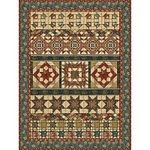
Beautiful quilt in Kathrines shop. I love 9-patch-quilts.
BOM "Sunshine Frolics"
"The Gift of friendship" by Natalie Bird; I like this pattern a lot and bought it on NQFs annual meeting.
Subscribe to:
Posts (Atom)


Quilter Blogs & Store Search